Computational models
Interactive models from papers and courses. Each opens as an app in the browser; its code is on GitHub.
Research (7) · Teaching (6) · On this site (4) · Infographics (3)
Research
-
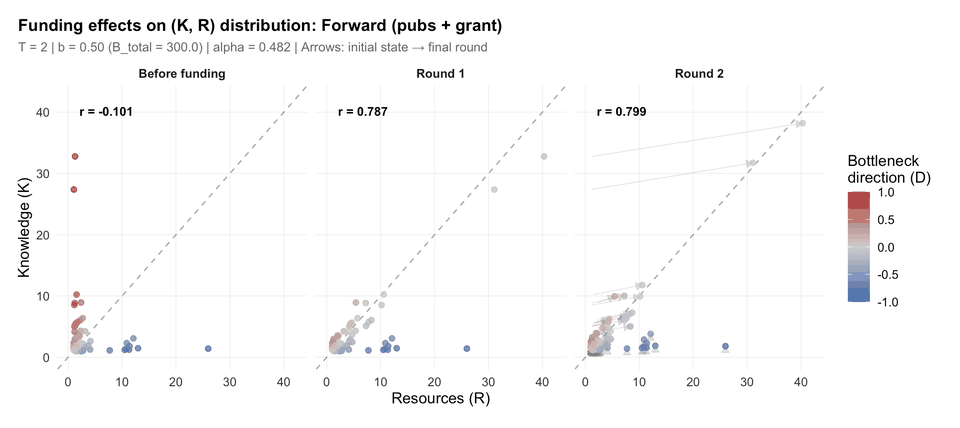
Optimal Grant Funding for Scientific Production
A Bayesian model of grant funding in which research output depends on talent and resources, and funding compounds talent over time. The optimal allocation funds the gap between capabilities and resources; the app compares strategies from peer review to uniform seed funding.
-
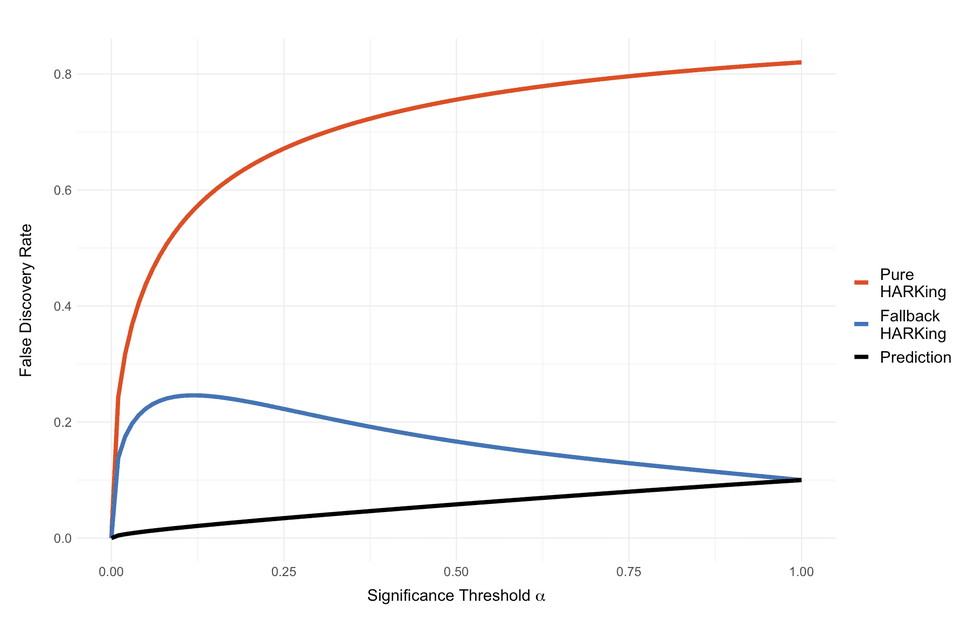
Modeling Interventions in Science
How proposed reforms to scientific practice (redefining statistical significance, preregistration, rewarding null results) affect the reliability and fecundity of science under different background assumptions.
-
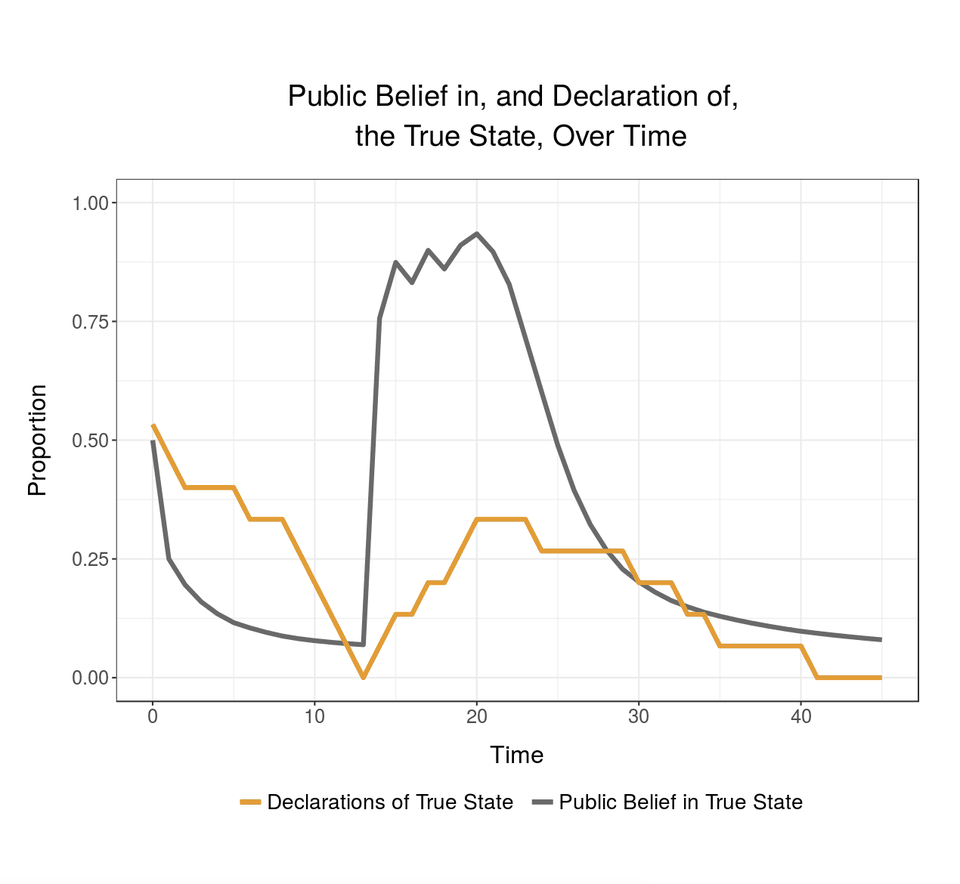
Bayesian Learning with Conformity on Social Networks
How social networks and conformity bias together shape the flow and reliability of information in social learning.
-
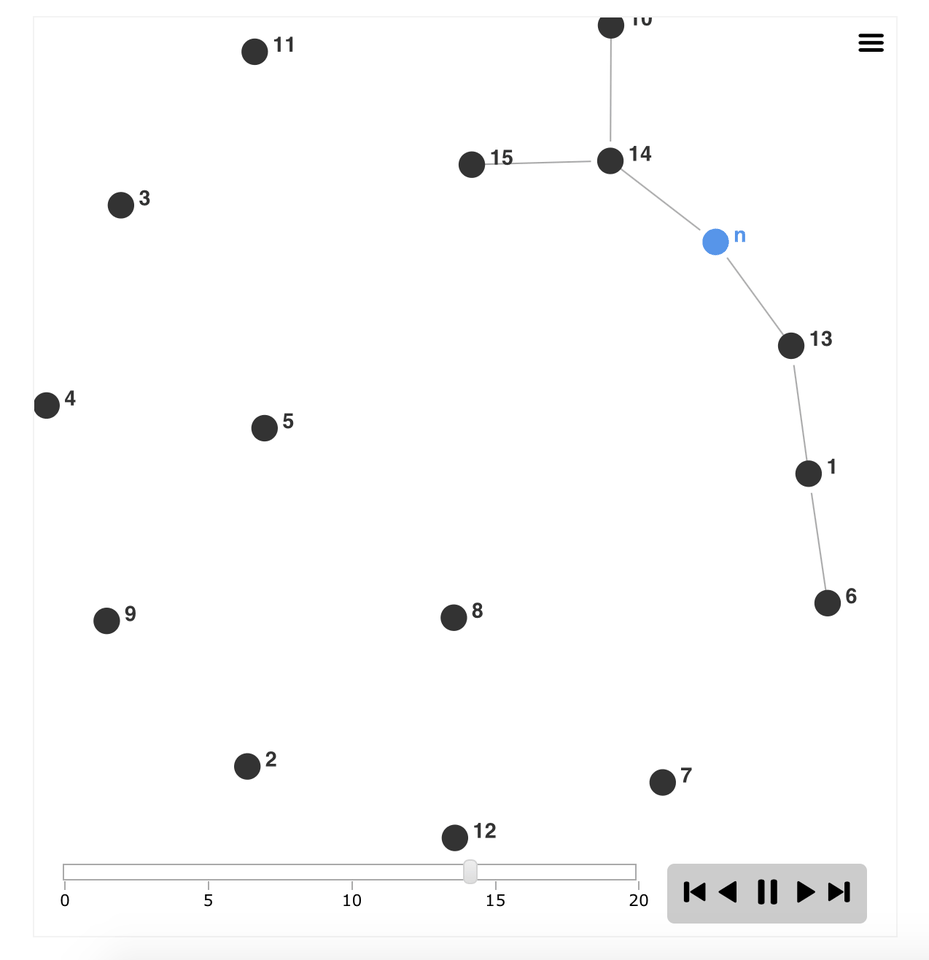
Self-Assembling Networks with Reinforcement Learning
How an epistemic network might assemble itself as agents of differing ability investigate nature and each other.
-
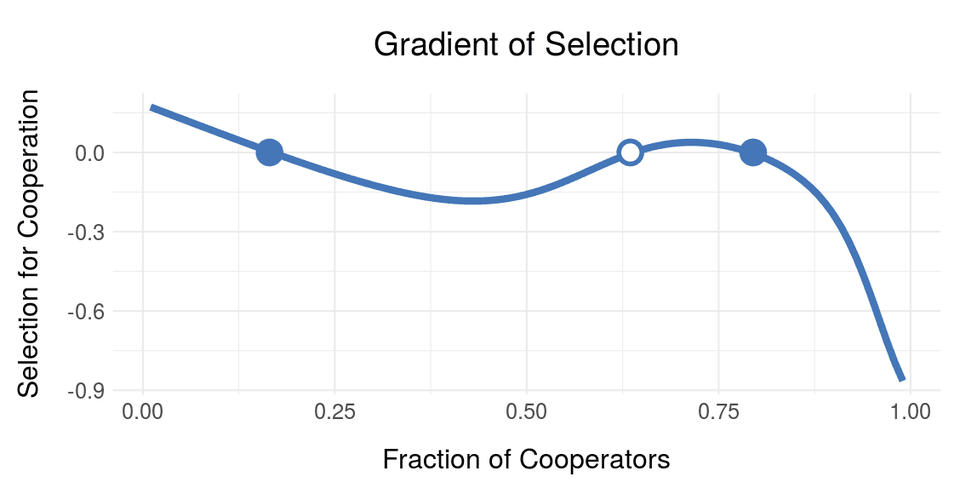
Tragedies of the Commons
How the perceived risk and size of the consequences of failing to cooperate, the cost of cooperation, and the size of the cooperating group affect N-person public goods games.
-
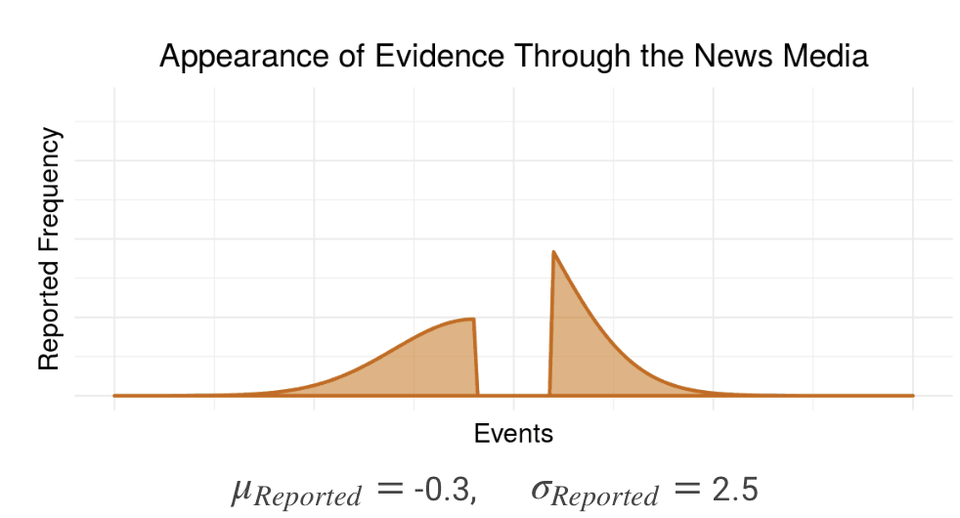
Reporting, Bias, and Belief Distortion
How individual confirmation bias, combined with selective or distorted news reporting, can lead to belief polarization.
-
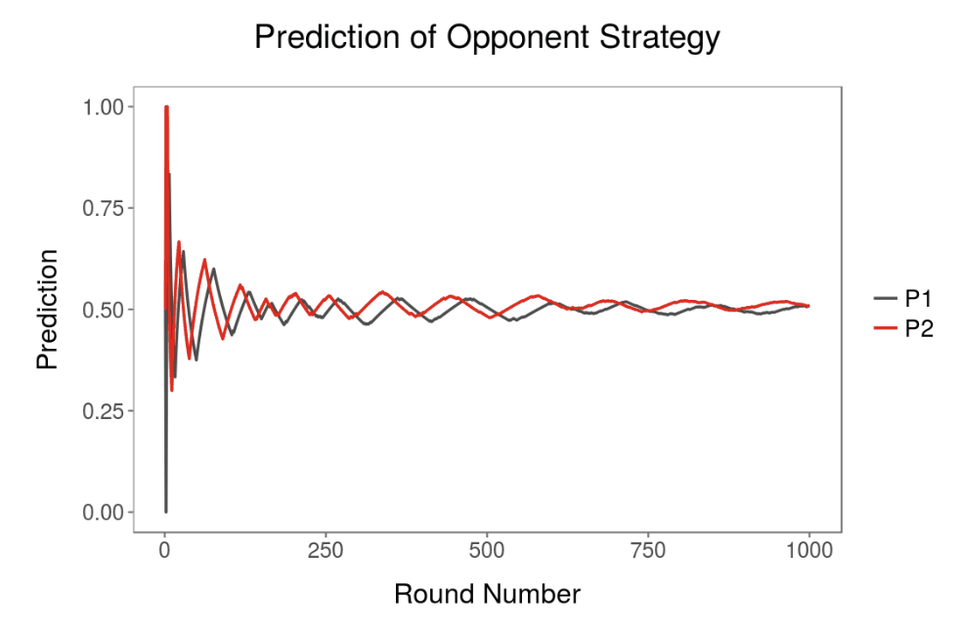
Rationality and Prediction in Games of Uncertain Information
The tension between rationality and prediction in near-zero-sum games, based on Foster and Young’s (2001) impossibility theorem, and how that tension might be resolved.
Teaching
-
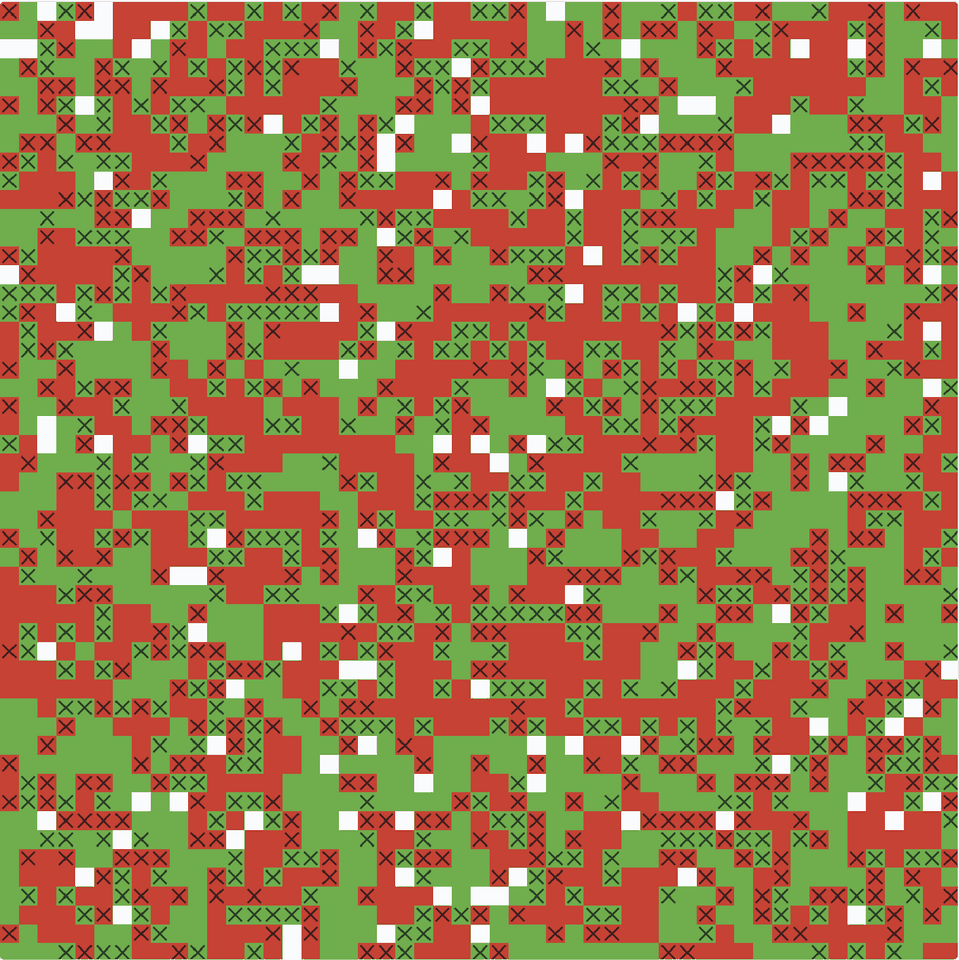
Schelling’s Segregation Model
How mild preferences for similar neighbors can produce strong segregation. Adjustable preference strength, density, lattice size, neighborhood type, number of types, and switching frequency.
-
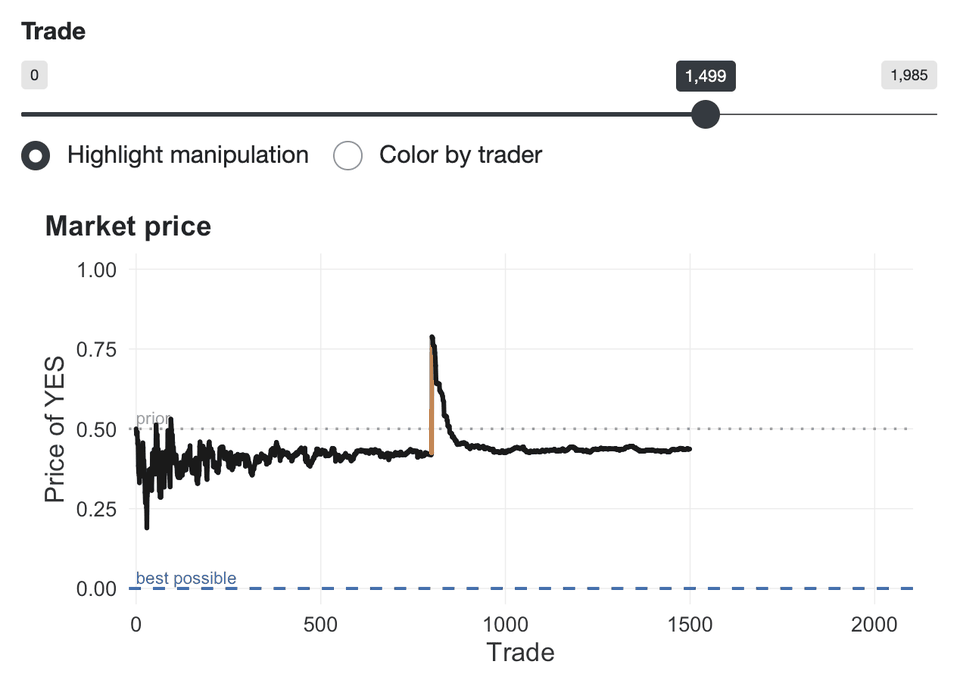
Prediction Markets Lab
The robustness of prediction markets: a binary market on an LMSR automated market maker, with Bayesian agents taking Kelly-sized positions under fees, participation costs, correlation, wealth inequality, herding, and manipulation. Run, dissect, and sweep the market’s parameters.
-
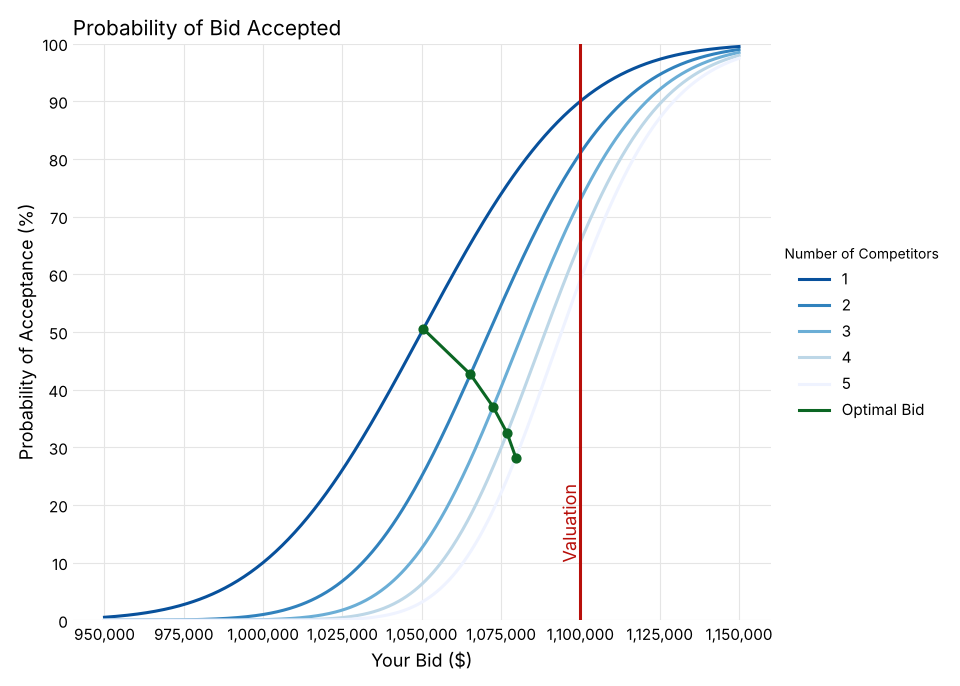
Optimal Bidding in a First-Price, Sealed-Bid Auction
A bidding strategy that balances bidding low to keep surplus against bidding high enough to win, with competitors’ bids modeled as normally distributed around an average.
-
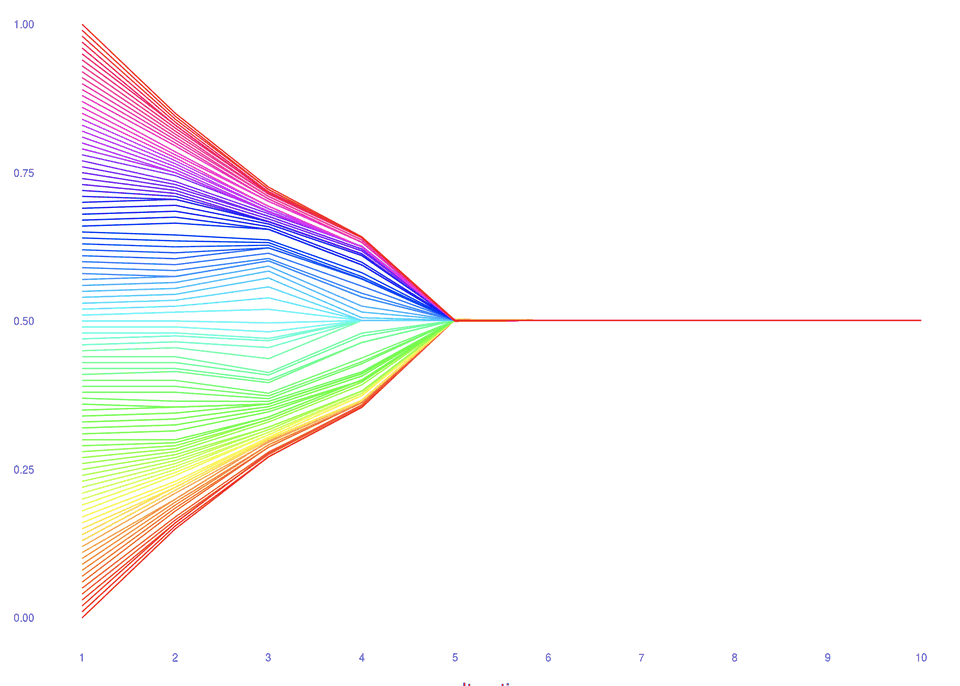
Bounded Confidence Model of Opinion Dynamics
When opinion formation in a group leads to consensus, polarization, or fragmentation, in the Hegselmann-Krause bounded confidence model.
-
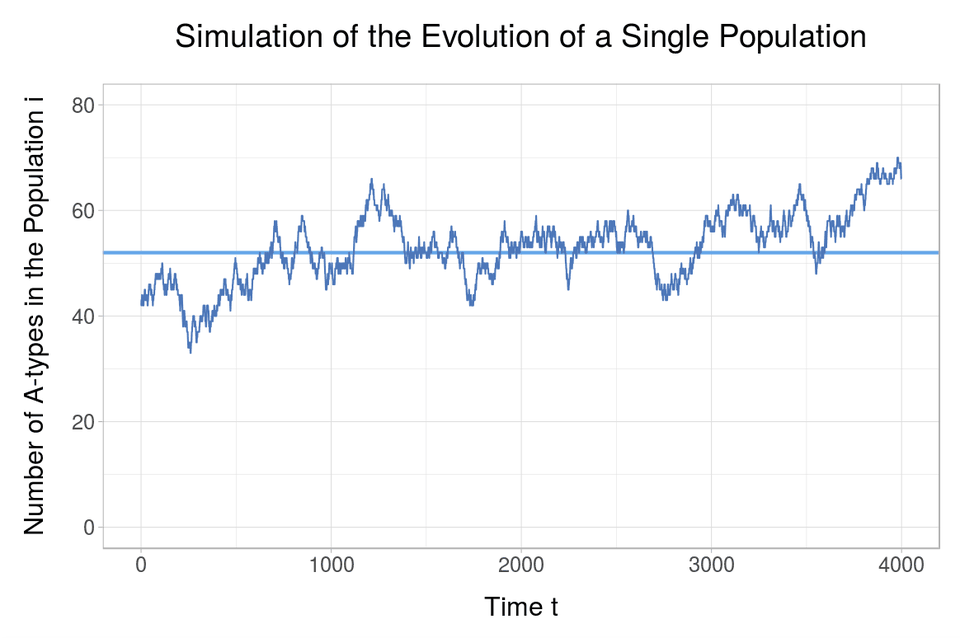
Frequency-Dependent Moran Process and Stability Concepts
Evolution with two interacting types in a fixed finite population, using the Moran process, which Nowak calls the simplest stochastic model of selection in a finite population (Evolutionary Dynamics, p. 94).
-
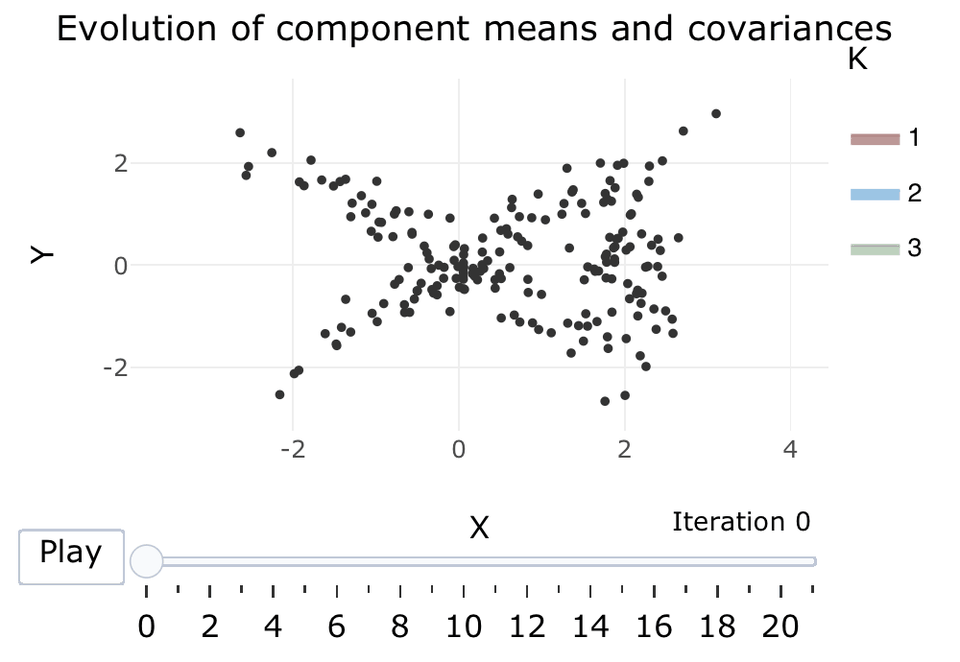
EM Algorithm for Gaussian Mixtures
The expectation-maximization algorithm for unsupervised learning and clustering: an iterative route to a maximum likelihood solution when data are missing or no analytic solution exists.
On this site
Four small models run live on the home page, one above the research strands and one in each strand. They are written for this site, and each has a “How it works” note that gives its sources.
- Chaos on the simplexThe replicator dynamics for a four-strategy game, whose orbits fold into a strange attractor.
- Refining a hypothesis spaceBayesian updating within a partition with a catch-all, which splits into new hypotheses as it gains probability.
- A community learning on a networkAgents try two actions and share results with their neighbors, settling on the better action or locking in on the worse.
- ReflectionSimulated futures of a Bayesian agent’s credence, whose average stays level, against an agent who expects to change its mind.
Infographics
-
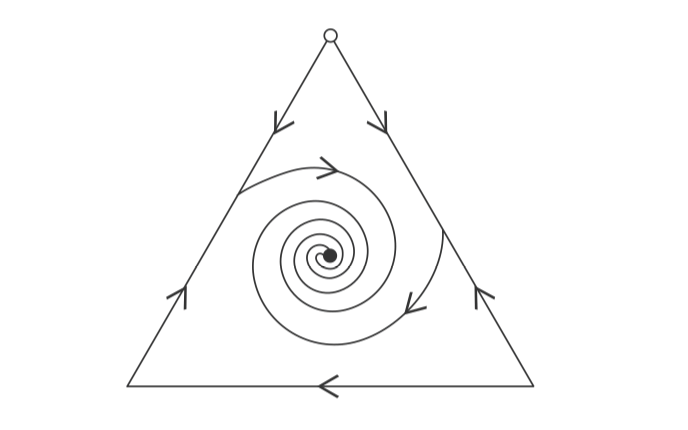
Bomze’s Classification of 3×3 Games under the Replicator Dynamics
The 49 qualitatively distinct replicator dynamics for populations of three types, their stability properties, and how they relate to the equilibrium concepts ESS, NSS and ESSet.
-
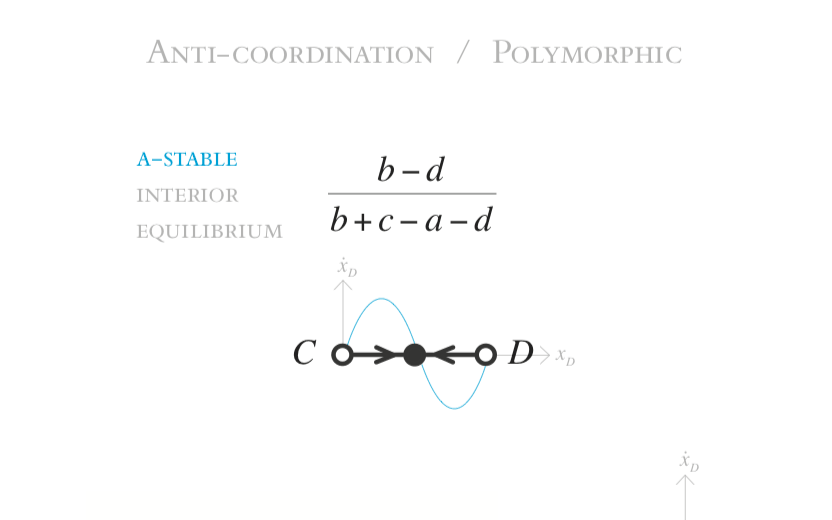
Classification of 2×2 Games under the Replicator Dynamics
The five qualitative dynamics possible with two types, including the Prisoner’s Dilemma, Prisoner’s Delight, Stag Hunt and Hawk-Dove. With two types, the ESS captures every evolutionarily significant outcome.
-
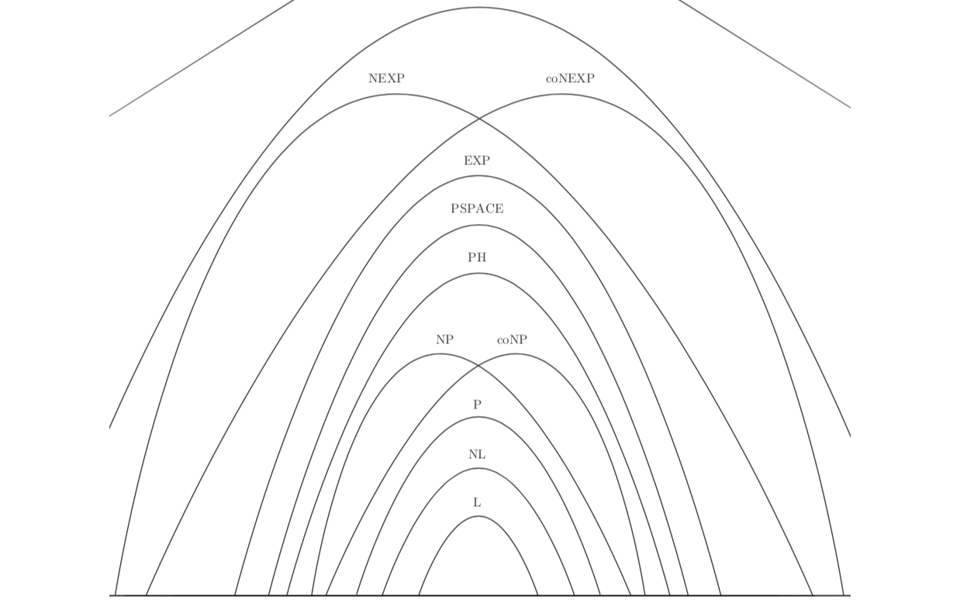
PAC Learning, Occam’s Razor, and the Transfinite Hierarchy
Does the PAC-learning theorem of Blumer et al. (1987) justify Occam’s razor? Herrmann argues that the theorem’s work is done by further inductive assumptions, not by simplicity, so it cannot justify the razor.